What reformer and mat Pilates have in common
Both follow the method Joseph Pilates developed in the early 20th century: controlled movement, breath, a strong and stable centre, and precise alignment. Whichever you choose, you'll work the deep abdominal muscles and pelvic floor, improve posture and build long, mobile muscles without high impact on your joints.
The difference is the tool. One uses a machine with springs; the other uses the floor and your own bodyweight. That changes how the exercises feel, who they suit and what they cost.
The main differences at a glance
| Reformer Pilates | Mat Pilates | |
|---|---|---|
| Equipment | A sliding carriage, springs, footbar and straps | A mat, sometimes small props like a ring or ball |
| Resistance | Adjustable springs, from very light to heavy | Your own bodyweight |
| Support | The machine can assist movements, which helps beginners and rehab | No assistance, so core control does all the work |
| Class size at Refine | Maximum 5 people | Group mat classes |
| Price at Refine | $35 drop-in, Intro Pack 5 for $100 | $25 drop-in |
| At home | Needs the equipment | Easy to practise anywhere |
How the reformer works
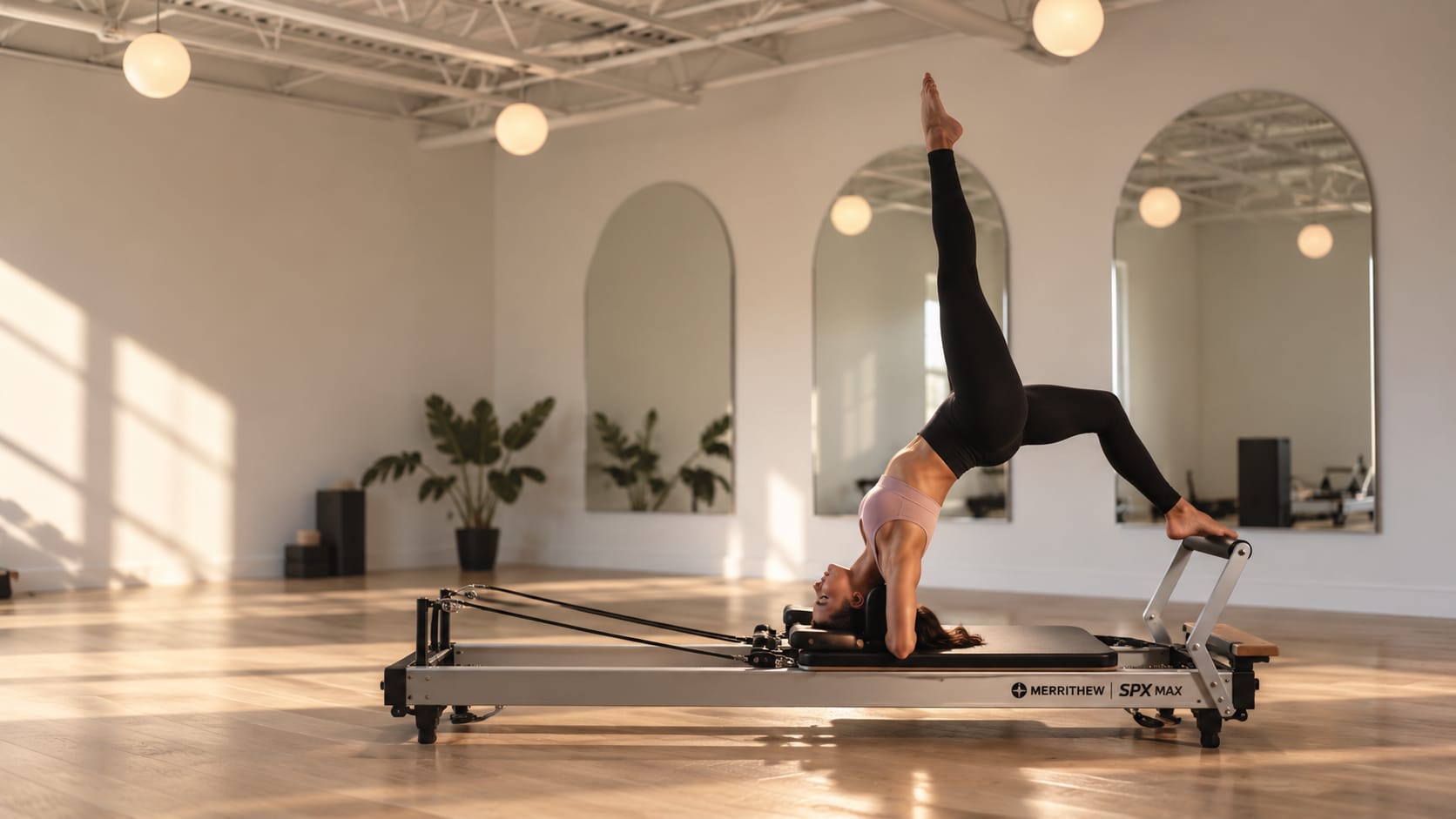
A reformer is a bed-like frame with a padded carriage that slides along rails. Springs attach the carriage to one end, and you push or pull against them with your feet on the footbar or your hands and feet in straps. Your instructor changes the springs to change the load.
That adjustability is the reformer's biggest advantage. The same exercise can be lightened for someone coming back from an injury or made much harder for an experienced client. The moving carriage also adds a balance challenge and lets you work through a bigger range of motion than you could on the floor.

Why mat Pilates is harder than it looks
On the mat there's nothing to push against and nothing to help you. Classic exercises like the hundred, roll-ups and the teaser rely entirely on your own control. That makes mat work an excellent teacher of the core connection that every Pilates exercise depends on, and it's the version you can take anywhere.
Which should you choose?
Choose reformer Pilates if you want to
- Build strength with adjustable resistance
- Work around an injury or come back from one with support
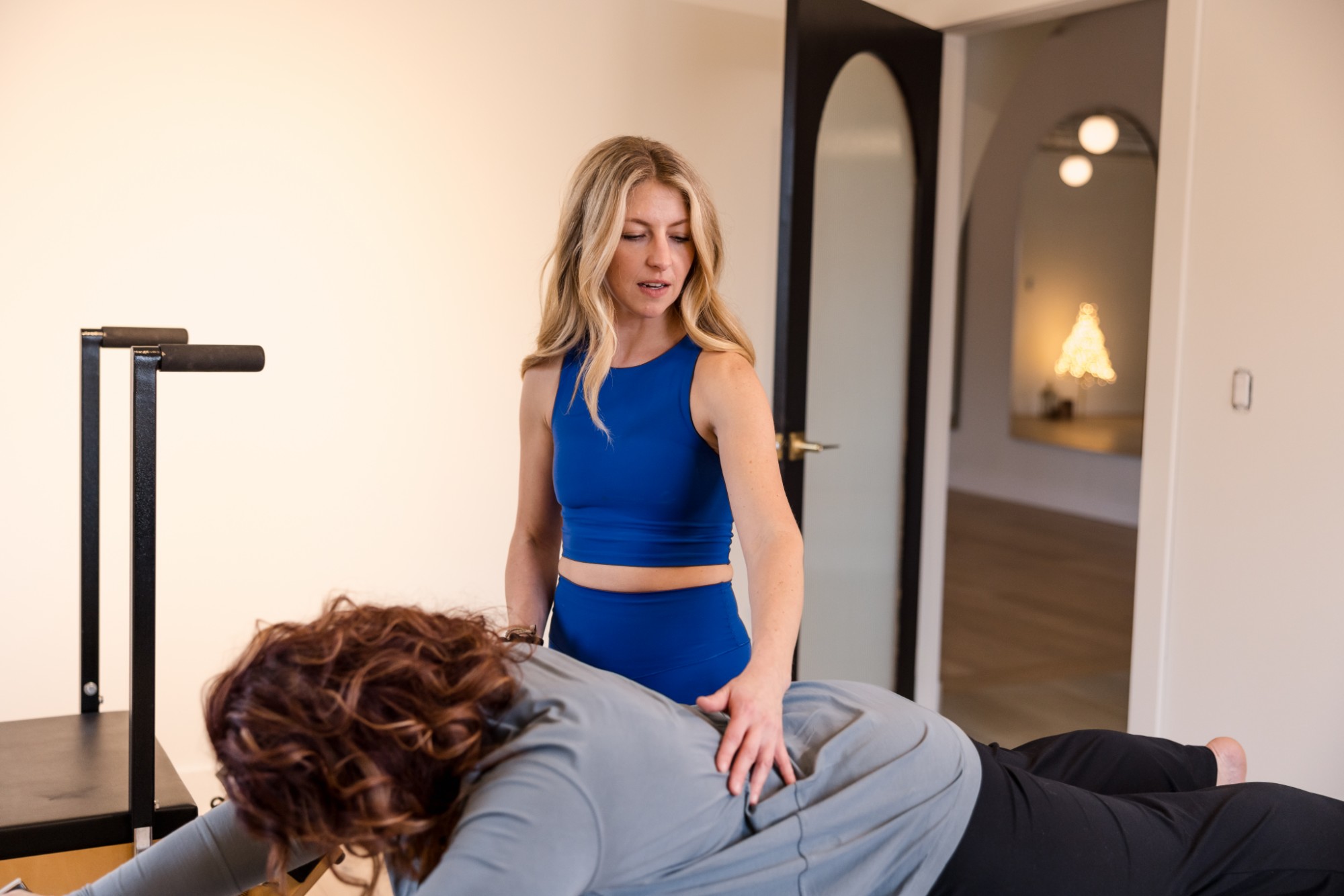
- Get very hands-on coaching in a class of five or fewer
- Try something new that feels approachable on day one
Choose mat Pilates if you want to
- Learn the fundamentals at a lower cost per class
- Build deep core control using only your bodyweight
- Practise at home or while travelling
- Combine Pilates with yoga in the same schedule
Why many people do both
Mat and reformer work strengthen each other. The reformer helps you feel correct alignment and builds strength; the mat tests whether you can control that strength on your own. A common rhythm is one or two reformer classes a week plus a mat or Pilates Yoga Fusion class.
Trying both at Refine
Refine Pilates & Yoga is at 1534 Niagara Stone Rd in Niagara-on-the-Lake. Reformer classes are capped at five people, and first-timers can start with the Reformer Intro Pack: 5 classes for $100, used within 5 weeks. Mat Pilates and yoga classes are $25 as a drop-in. See this week's classes on the schedule, or read what to expect at your first reformer class.